
Investing in a holiday home can be one of the most profitable decisions you can make in southern Spain. However, many owners are swayed by the purchase price or estimated gross income, without taking into account all the associated costs. In this article, we will look at how to calculate the actual return on investment for a holiday home on the Costa de la Luz, distinguishing between gross and net returns, and using clear, practical examples.
How do you calculate profitability?
Gross profit: the first step
La rentabilidad bruta mide la relación entre los ingresos anuales y el precio de compra de la vivienda.
Formula:
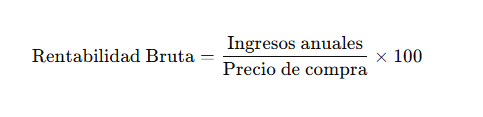
Example:
-
Purchase price: €150,000
-
Annual income from holiday rentals: €15,000
- Formula: 15,000 ÷ 150,000 × 100 = 10%
In this case, the gross return would be 10%.
Net profitability: a realistic view
Gross yield is only a rough estimate. To find out exactly how much a property owner earns, we need to deduct the annual costs associated with the property.
Among the most common are:
-
IBI (Property Tax).
-
Homeowners’ Association.
-
Utilities (water, electricity, internet).
-
Maintenance and repairs.
-
Cleaning and laundry between stays (if managed separately, at HOMA we have an in-house cleaning department).
-
Professional management (if outsourced to a company such as HOMA).
Example using the same data as before:
-
Annual income: €15,000
-
Total expenses: €3,800 (property tax €400, service charges €600, utilities €1,200, cleaning €800, management fees €800)

In this case, the owner achieves a net return of 7.5%.

What are the typical returns on investment along the Costa de la Luz?
In the Ayamonte, Isla Canela and Costa Esuri area, the average return typically ranges between:
-
6% and 8% net annual return on well-managed holiday apartments.
-
4% and 5% on second homes that are only occasionally occupied by the owner.
-
8% to 10% on optimised projects that utilise professional revenue management services.
This means that the Costa de la Luz is one of the most attractive areas for small and medium-sized investors looking to diversify into holiday properties.
How can you improve the profitability of your property?
Profitability does not depend solely on location or purchase price. There are several factors that can make all the difference:
-
Optimise pricing with dynamic revenue strategies.
-
Refresh the décor and improve the photos for the listing.
-
Extend the season by offering longer stays during low-season months.
-
Outsource management to maximise occupancy without compromising the guest experience.
Conclusion
Investing in a holiday home can generate a much higher return than other financial products or long-term rentals, provided that each transaction is thoroughly analysed and expenses are managed properly.
At HOMA, we support property owners and investors every step of the way, from profitability analysis to the day-to-day management of the property, ensuring transparency, optimisation and results.
👉 Would you like to find out how profitable your property is? Get in touch with our team and we’ll provide you with a personalised analysis, with no obligation.